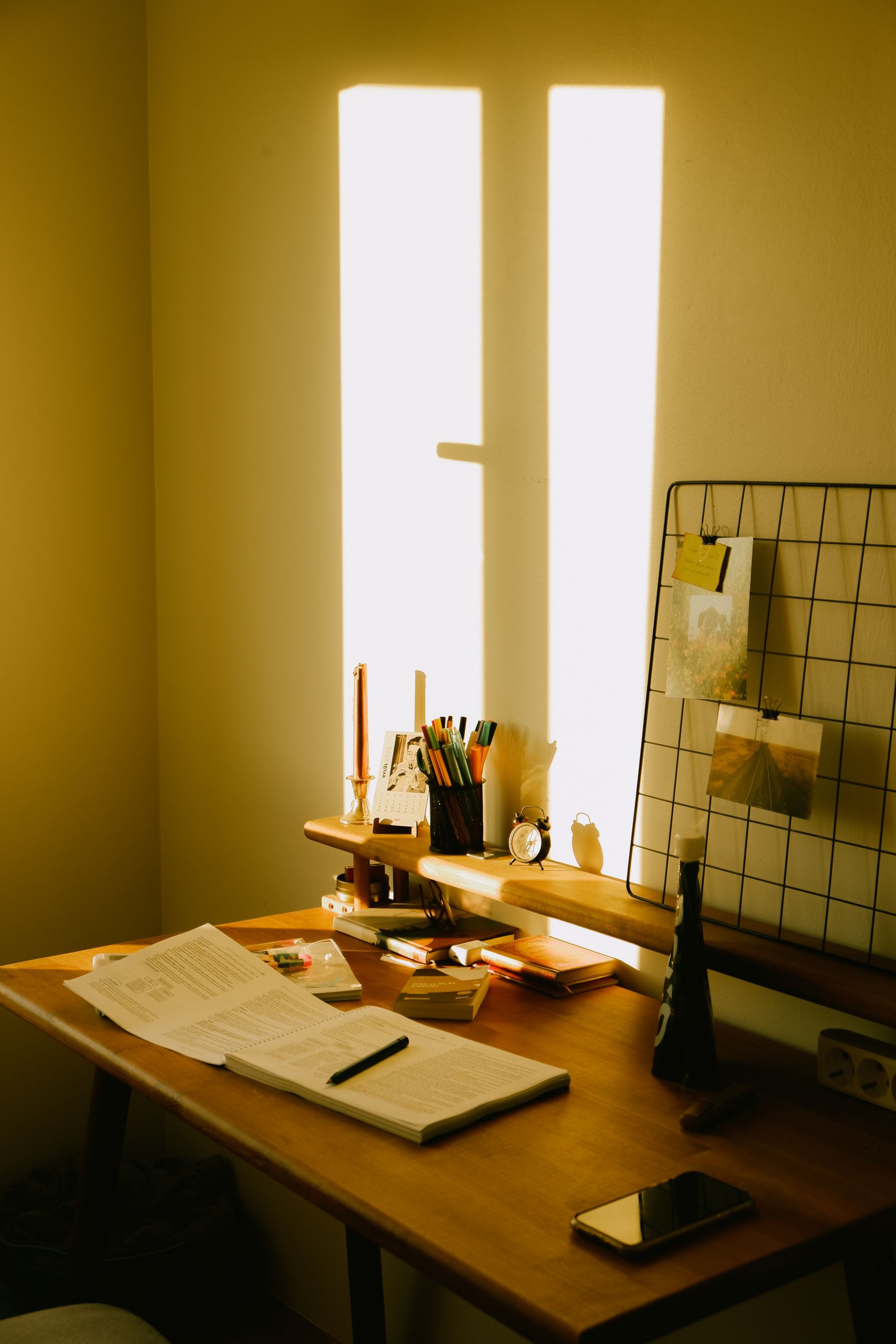
How to stop procrastinating on studying
“Study for the exam” is too broad to tell you where to begin. Pick one question and a short session with a visible result.

Turn “study” into an action
A useful session answers a specific question or creates something you can check. Replace “study biology” with “explain the difference between mitosis and meiosis without looking at my notes.” Replace “write essay” with “draft three possible answers to the essay question.”
Choose an action appropriate to your current knowledge. If you have not encountered the topic yet, start by reading one short section and writing the question it answers. If you have already studied it, try recalling what you know before checking the material.
Make the first session smaller than the assignment
You do not need to plan the whole semester before opening the book. Select one page, one exercise, or one paragraph. Set out the material and remove one distraction. If five minutes is all you can commit to, use that as a starting boundary.
A small session will not replace the time a large assignment needs. Its purpose is to reveal the next step and make the first contact with the work easier. After the session, estimate the remaining work using what you learned.
Separate missing understanding from avoidance
If you cannot solve an exercise because you do not understand a prerequisite, write down the exact gap. “I do not understand how to choose the test statistic” is a better help request than “I am bad at statistics.” Find the relevant example or bring the question to a teacher or study partner.
If you understand the material but keep switching away, change the surroundings or the commitment. Put the phone out of reach, use one open resource, and define what counts as finishing the session.
Use a restart note
Before stopping, write one sentence beginning “Next time, I will…” Make it specific enough that you can begin without making another decision. “Next time, I will answer question 4 and check my explanation against page 18” is a usable cue.
For a deadline, work backward from the submission time. Include time for the actual submission and for checking requirements. A timer can help you begin; it cannot create extra hours before a deadline.
Example: an essay you have not opened
First session: Open the assignment, copy the question into a document, and underline the instruction words.
Next session: Write a rough answer in three bullet points.
Then: Identify which bullet point needs evidence and find one relevant source.
Restart note: “Next: turn the second bullet into a paragraph with the source I found.”
Evaluate the plan, not your character
If the session does not happen, check whether the cue was realistic, the materials were ready, and the action was clear. Change one condition. You can also ask someone to sit with you for a short work session or agree on a check-in, without making them responsible for the whole assignment.
Avoid promising yourself a complete personality change. A study routine becomes more useful when it is based on what you actually do and can repeat.
One idea is enough to start with.
Make a first-step plan